01 · Copper
Where Tomorrow.
One-hand heirloom wall clock
 Photo
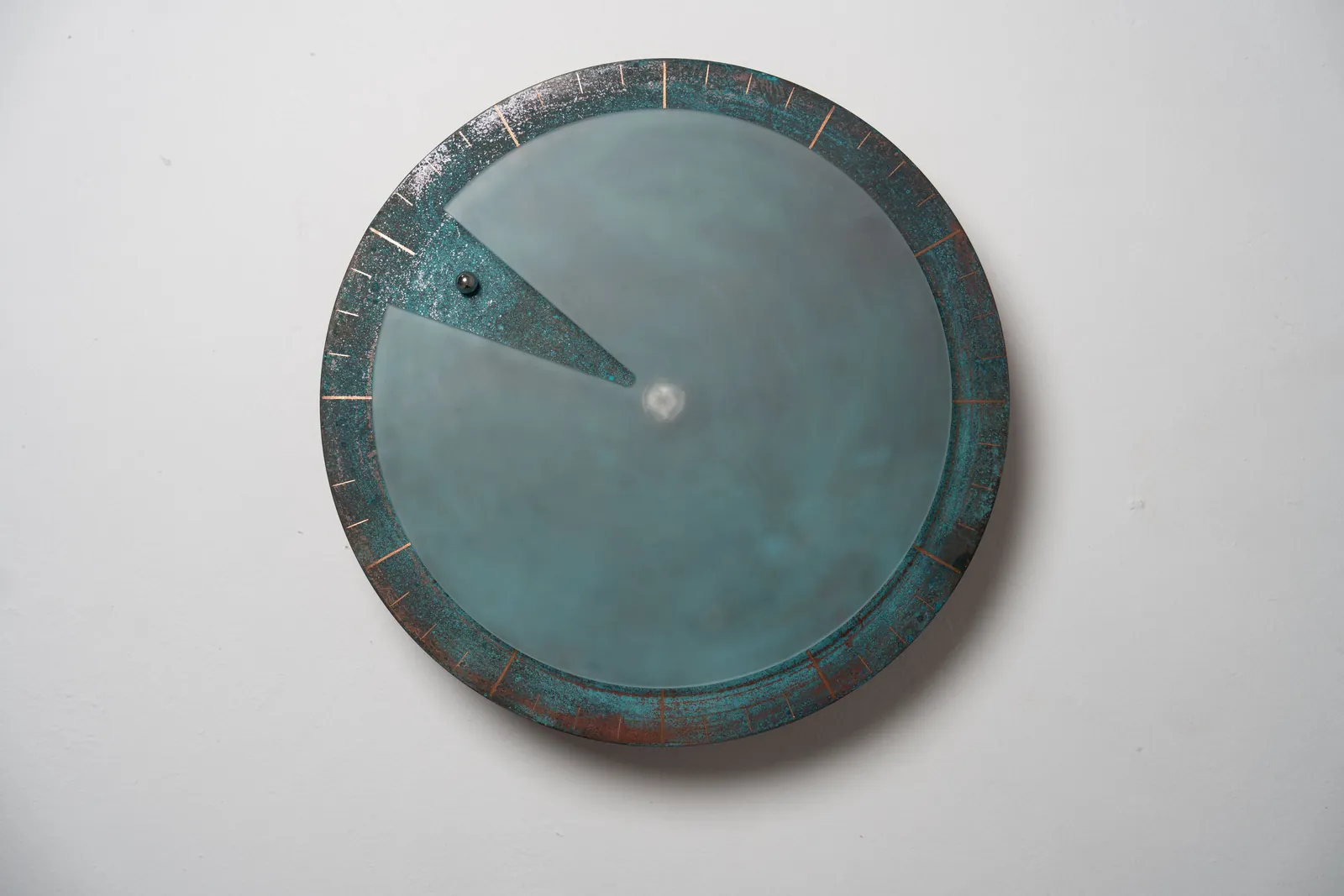
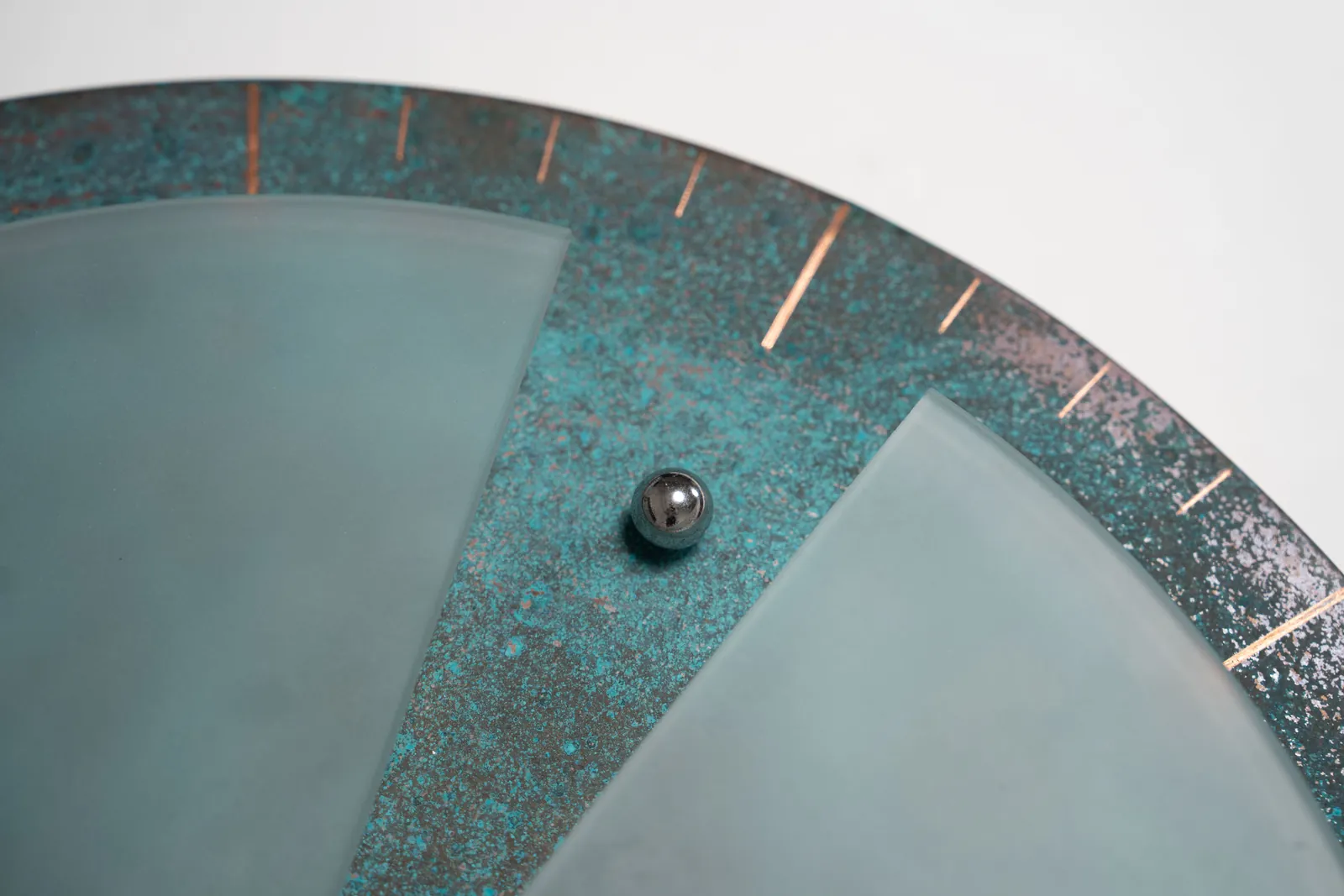
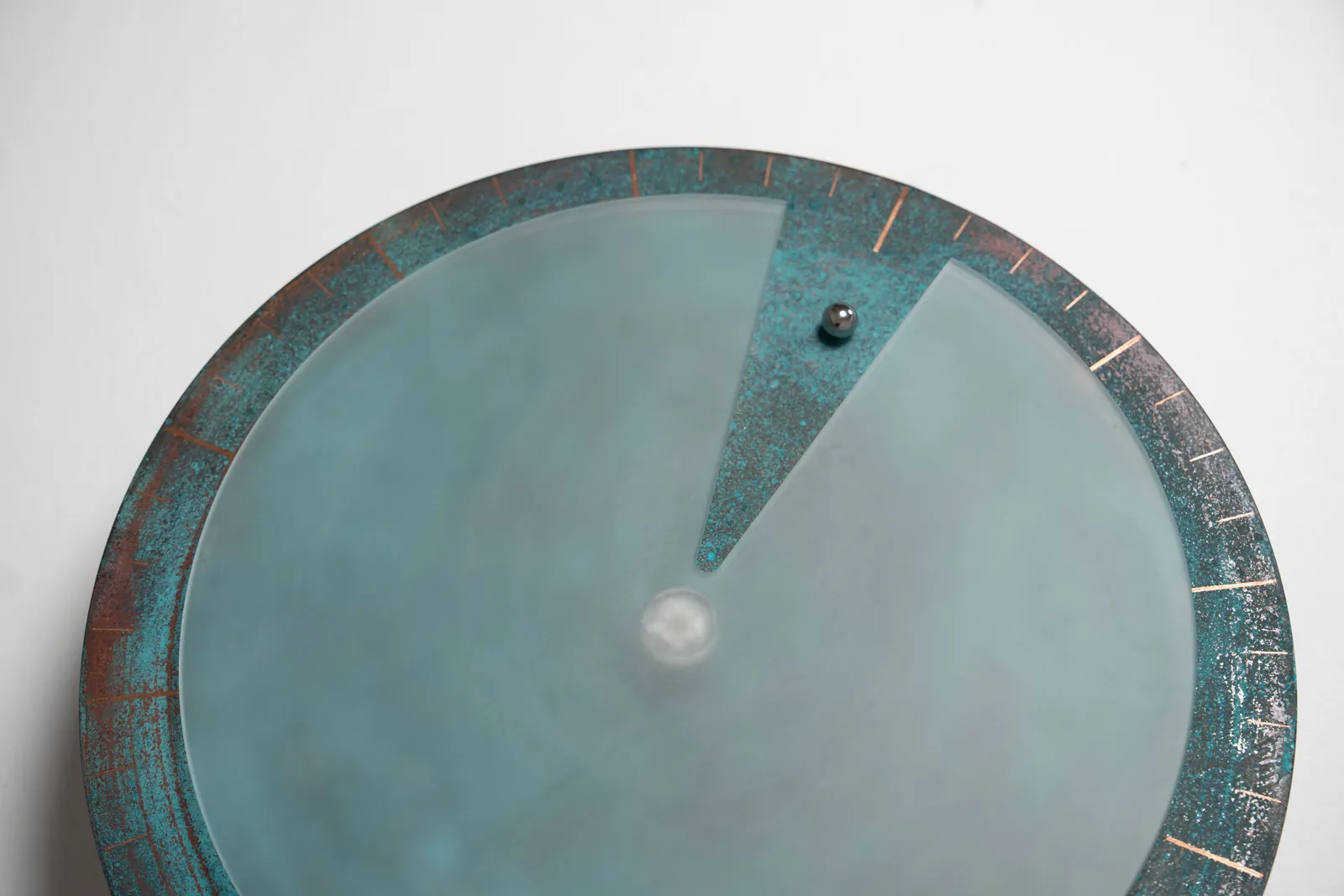
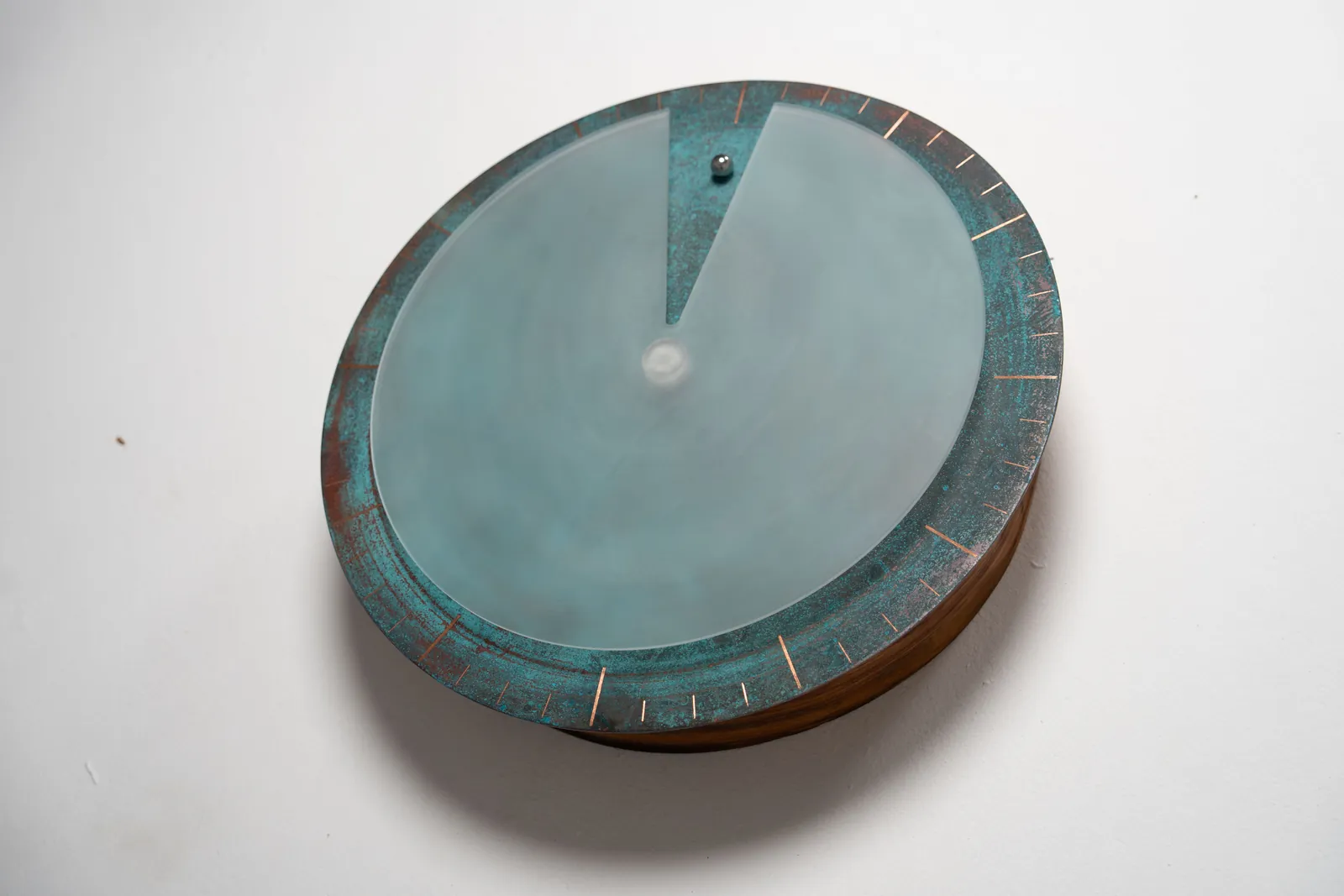
A hand you can't see moves a hand you can. A magnet behind a copper face drags one steel ball round the dial; a frosted veil shows only the present.
How it tells the time
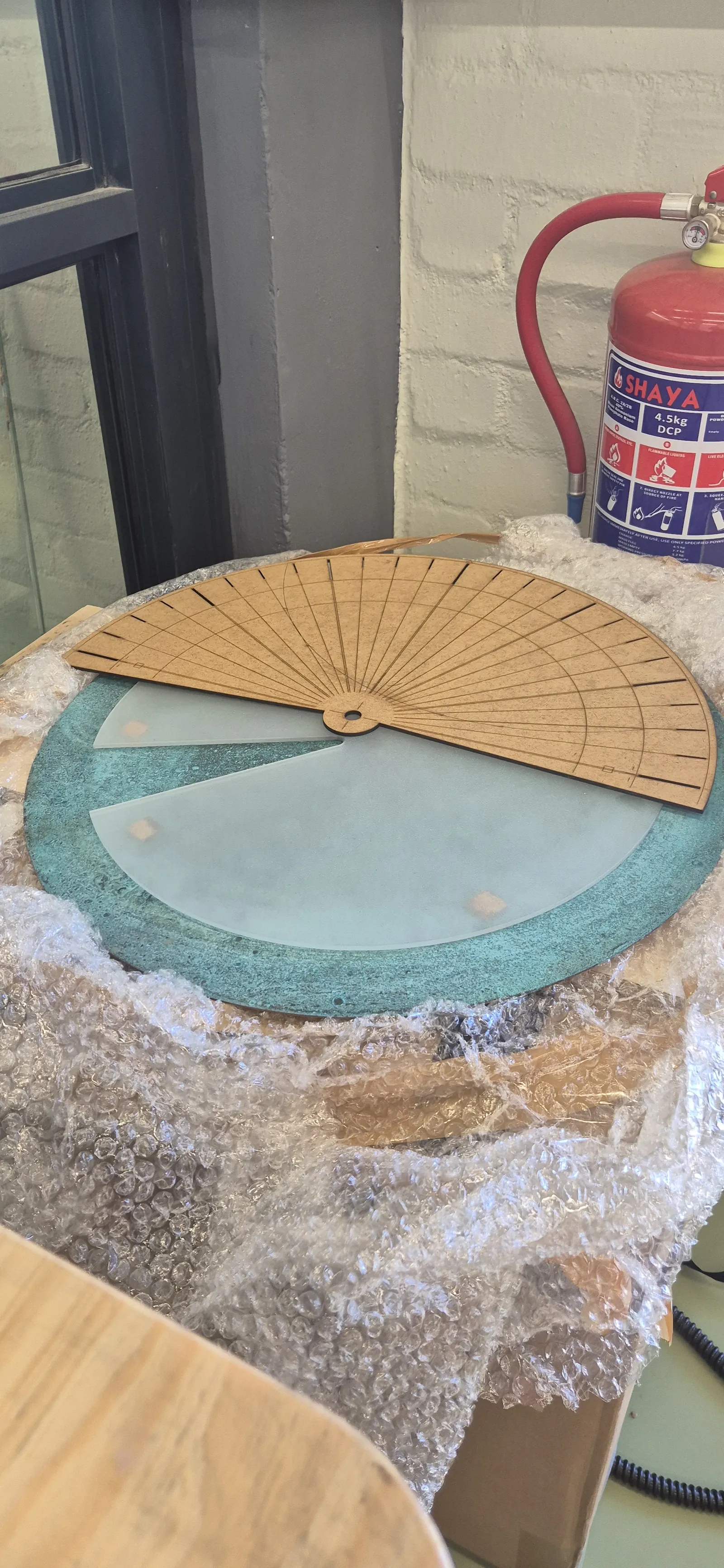
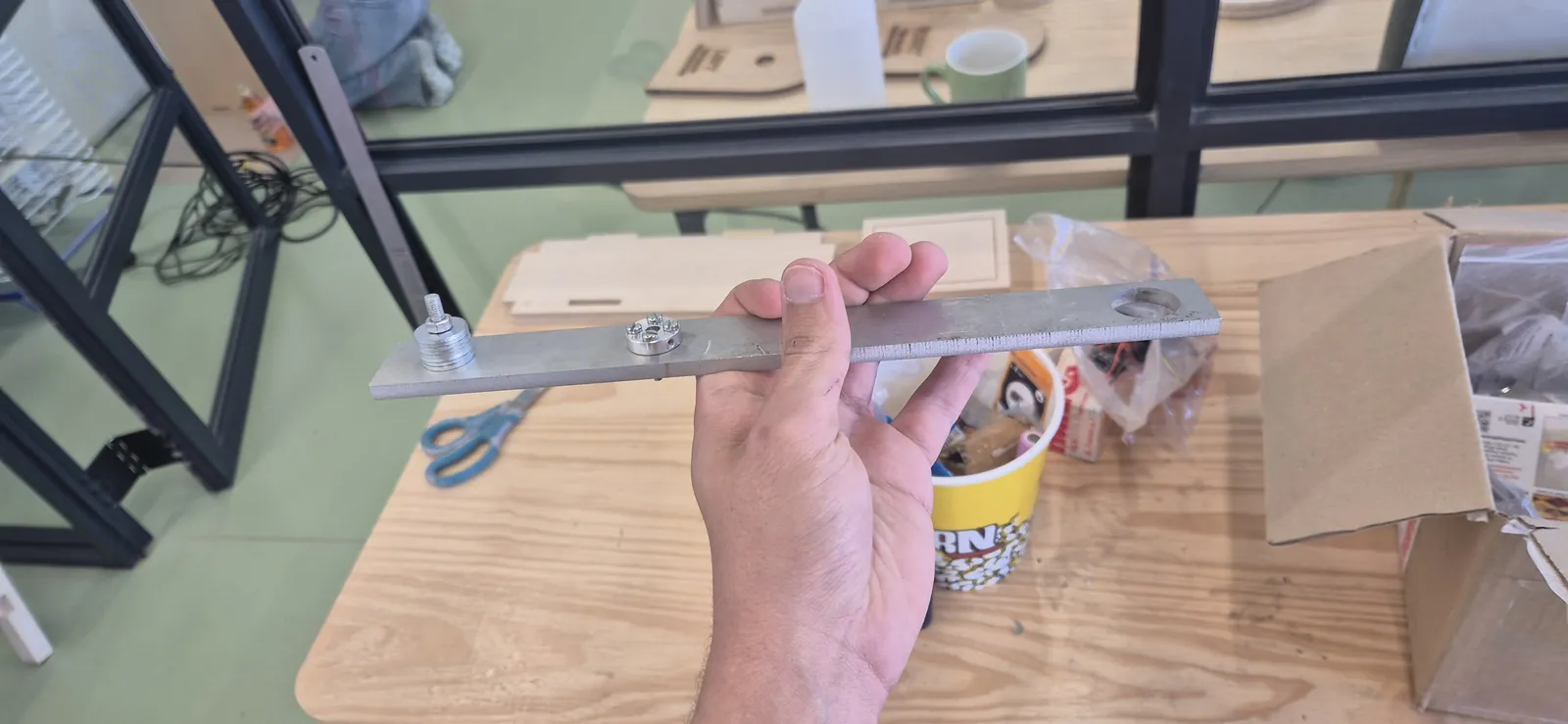
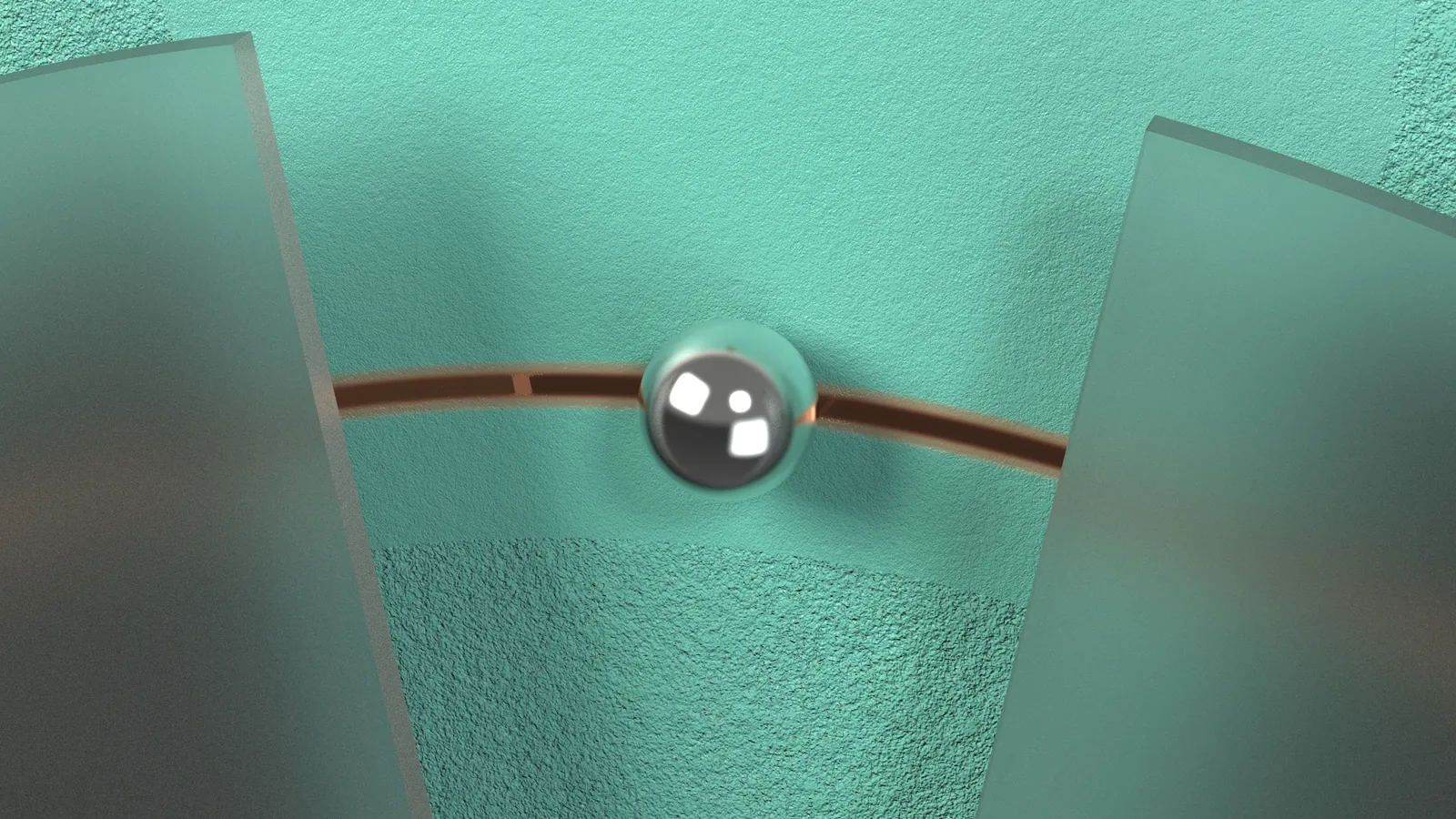
Move the time. Behind the copper an arm carries a magnet round once every 12 hours; the steel ball on the front follows it, and the frosted veil turns with it, so only the present shows through the clear wedge.
Brief
Design a piece of heirloom furniture: something built to be repaired, kept and passed on, and that tells a story about where you come from.
Idea
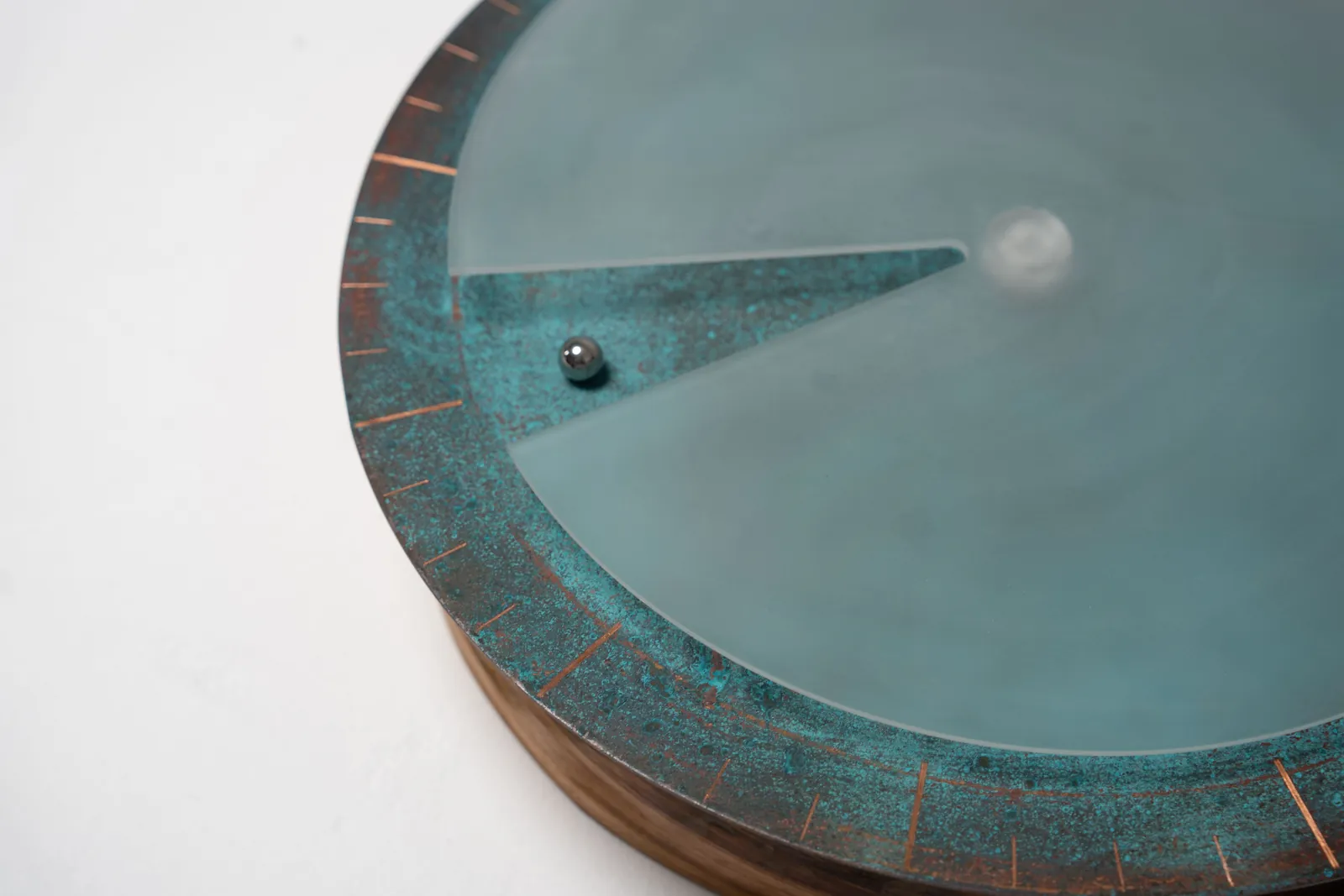
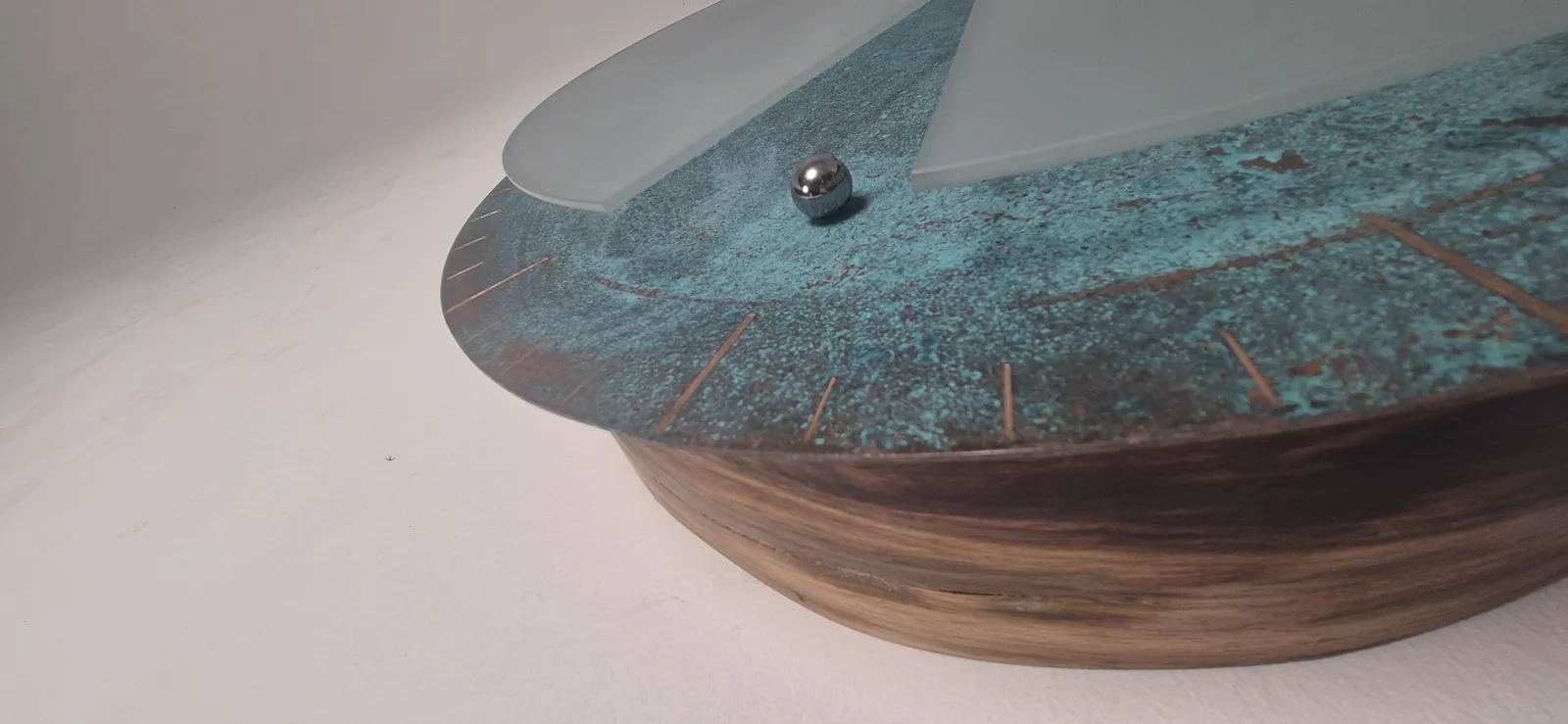
My family motto is Ubi cras, “where is tomorrow?”, used since 1826. Our name has been spelt four ways, and kloot means a ball, so in this clock the ball is the family's path: it wanders, but it always arrives. A frosted glass veil with a clear 22° wedge turns with it, so only the present hour is sharp, and over the years the ball should polish its own path into the patina.
Research
I surveyed 19 people: 13 keep objects because they tell a story, 12 keep things that belonged to someone they loved, 10 chose copper with dark wood, and 16 would repair rather than replace. Asking 15 suppliers the right question took the copper from a R4,560 sheet to a R920 circle cut to size.
Engineering
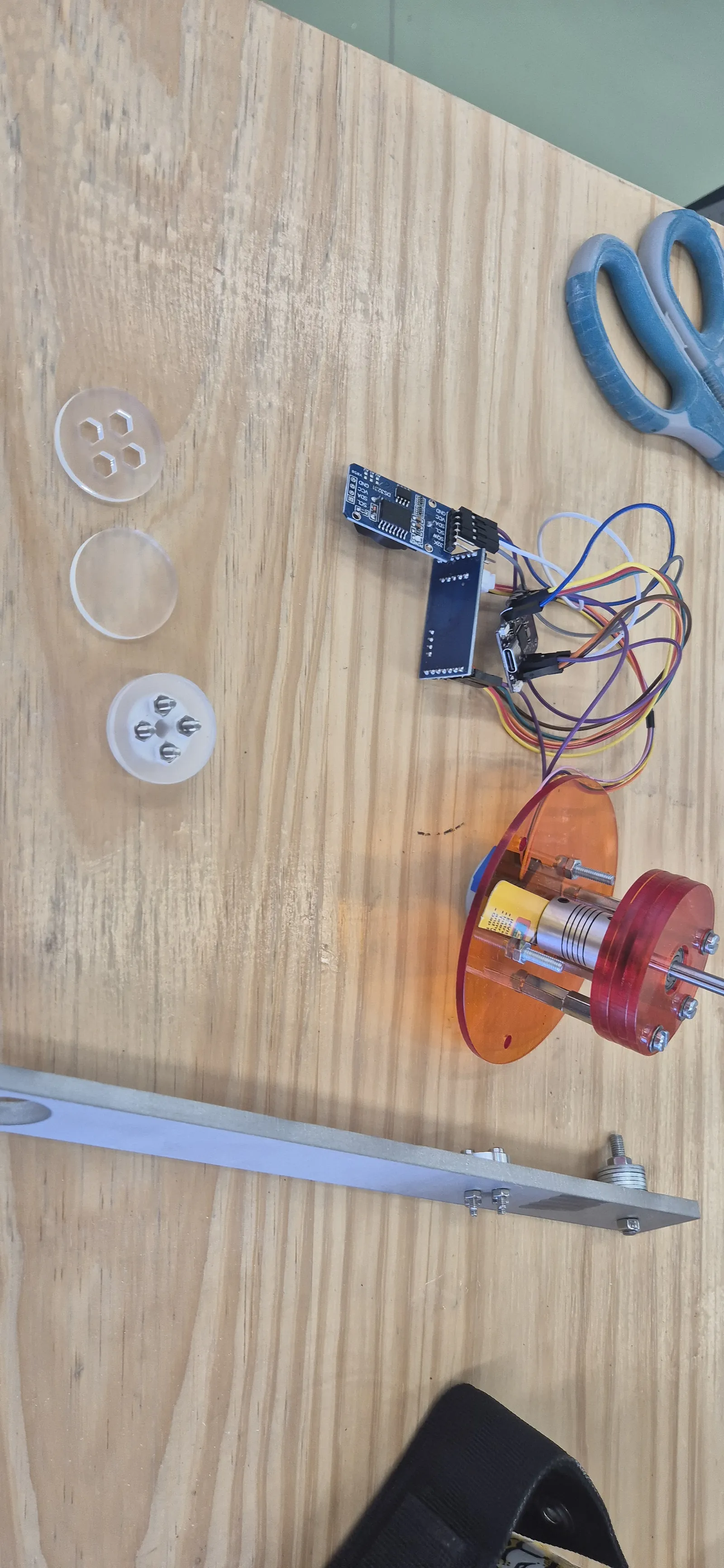
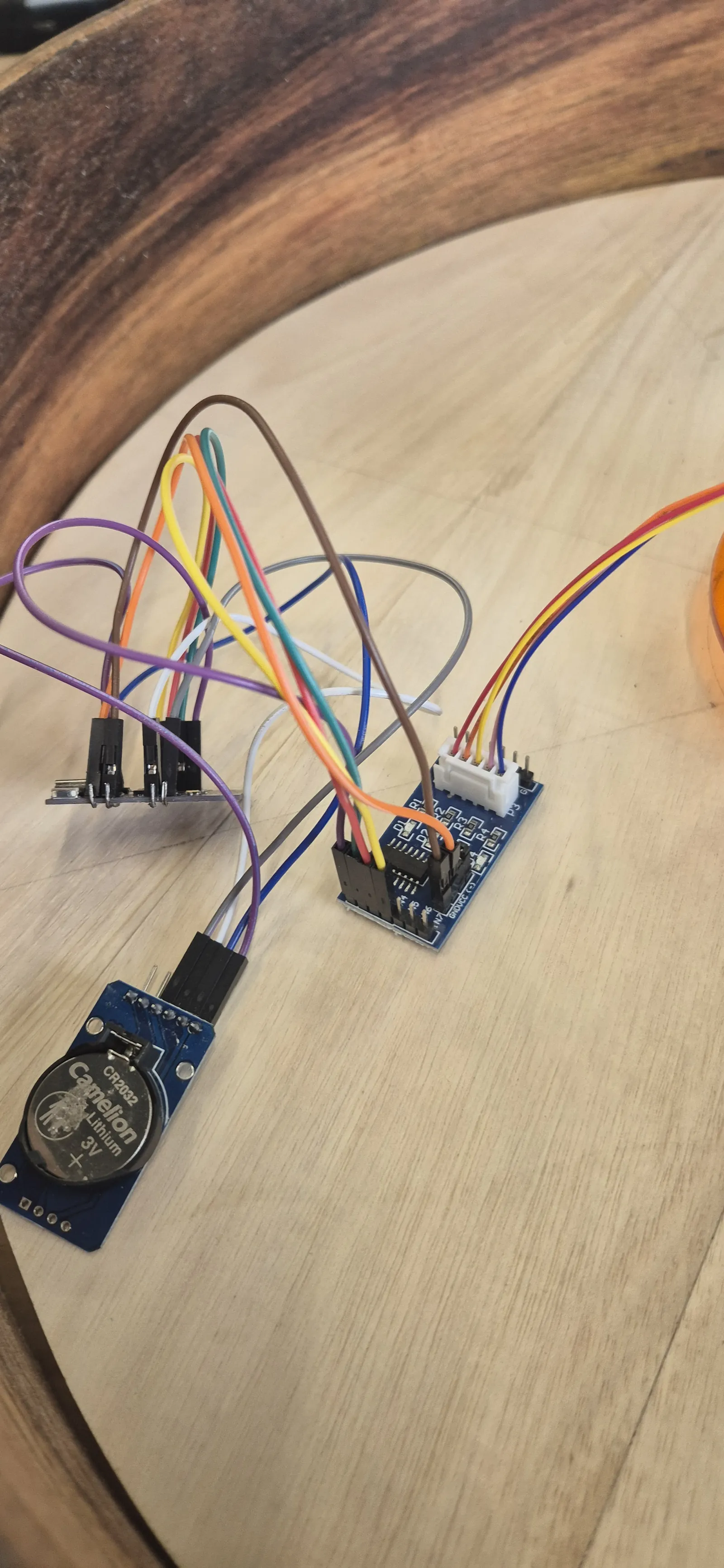
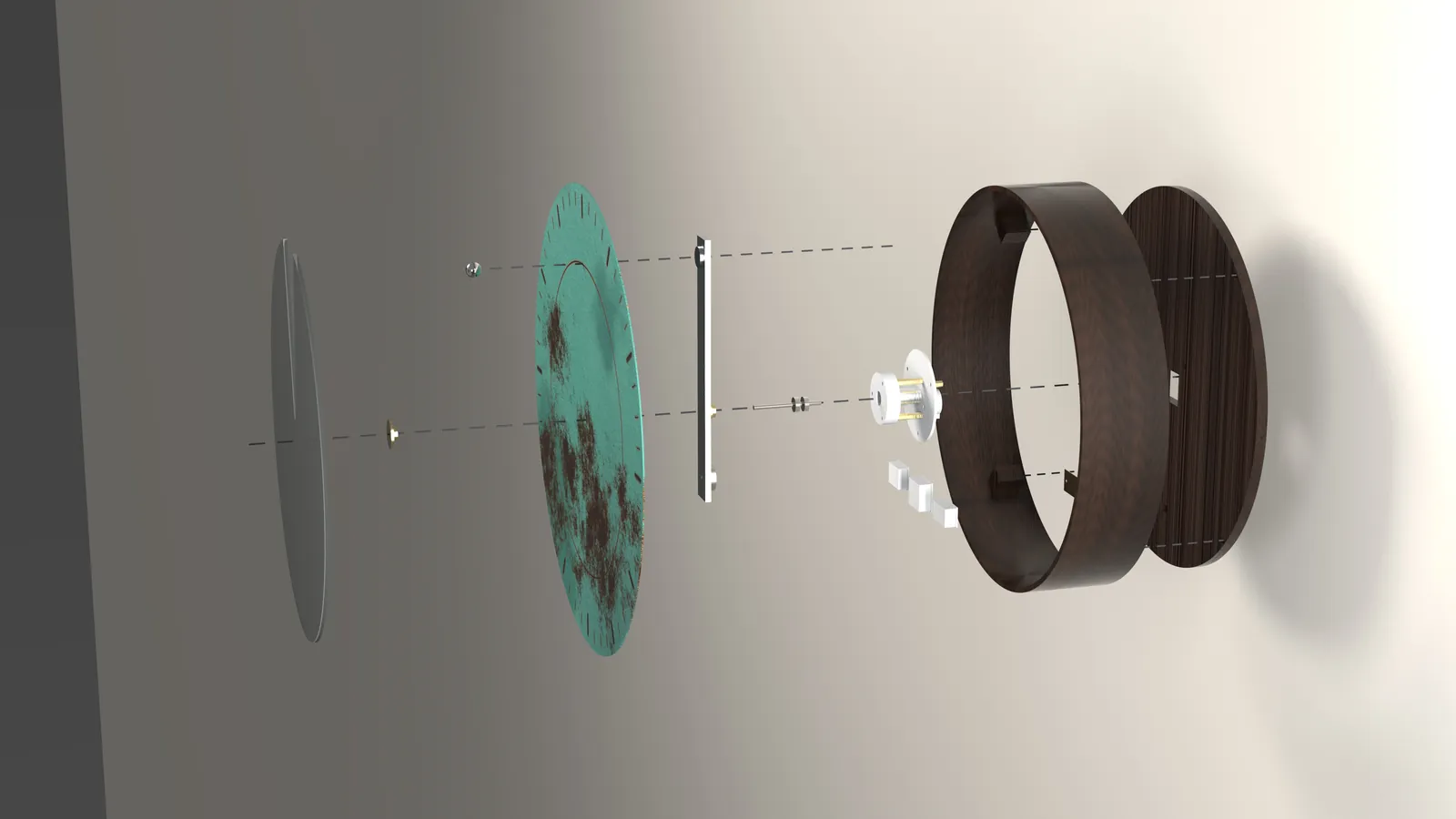
Behind the 1.6 mm copper face, a 28BYJ-48 stepper and a DS3231 clock chip turn an aluminium arm carrying a magnet once every 12 hours. Copper isn't magnetic, so the pull passes straight through to the Ø16 mm steel ball: about 5.2 N, roughly 32 times the ball's weight (calculated). The first drive, a quartz movement, stalled in testing, which is why it's a stepper.
Making
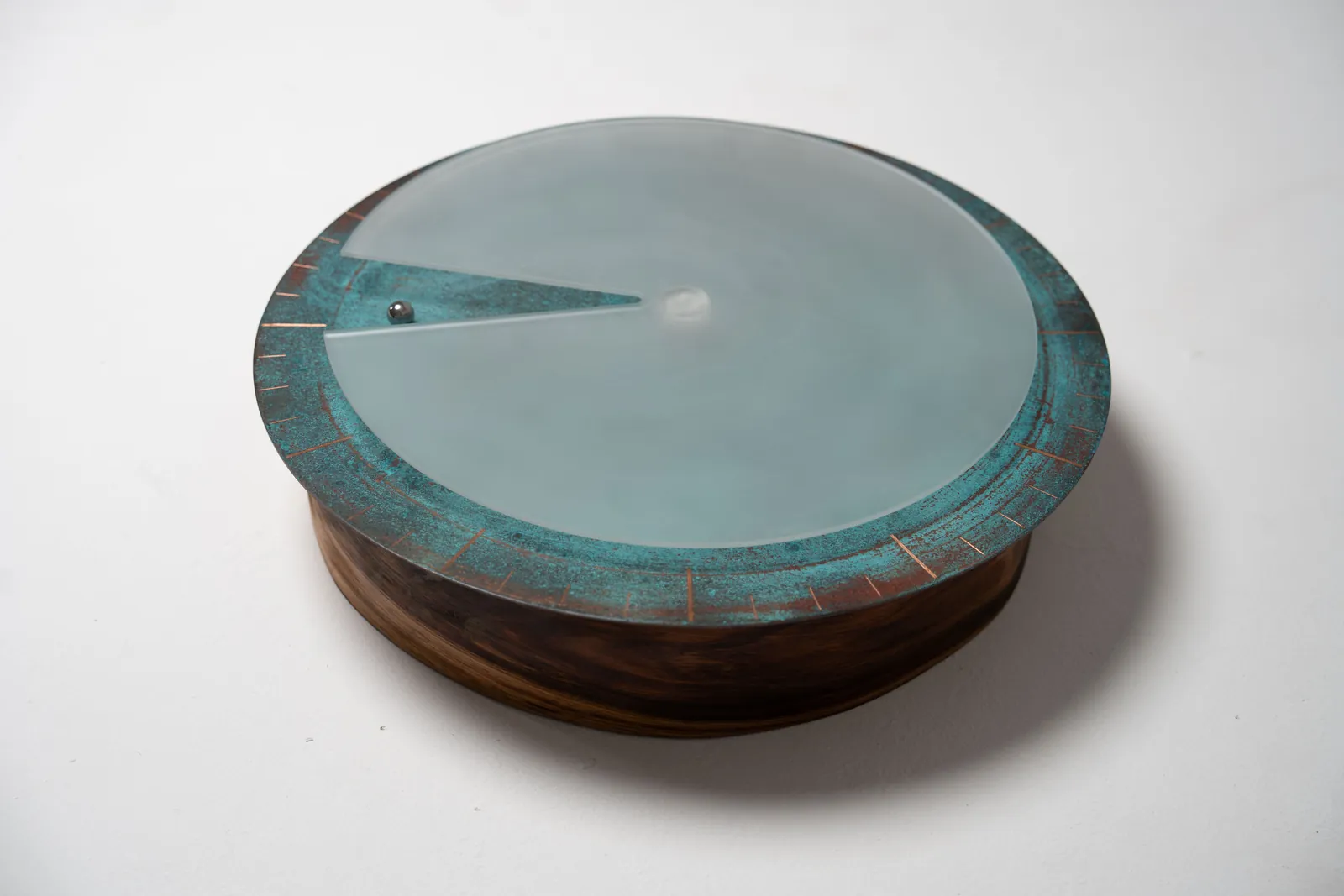
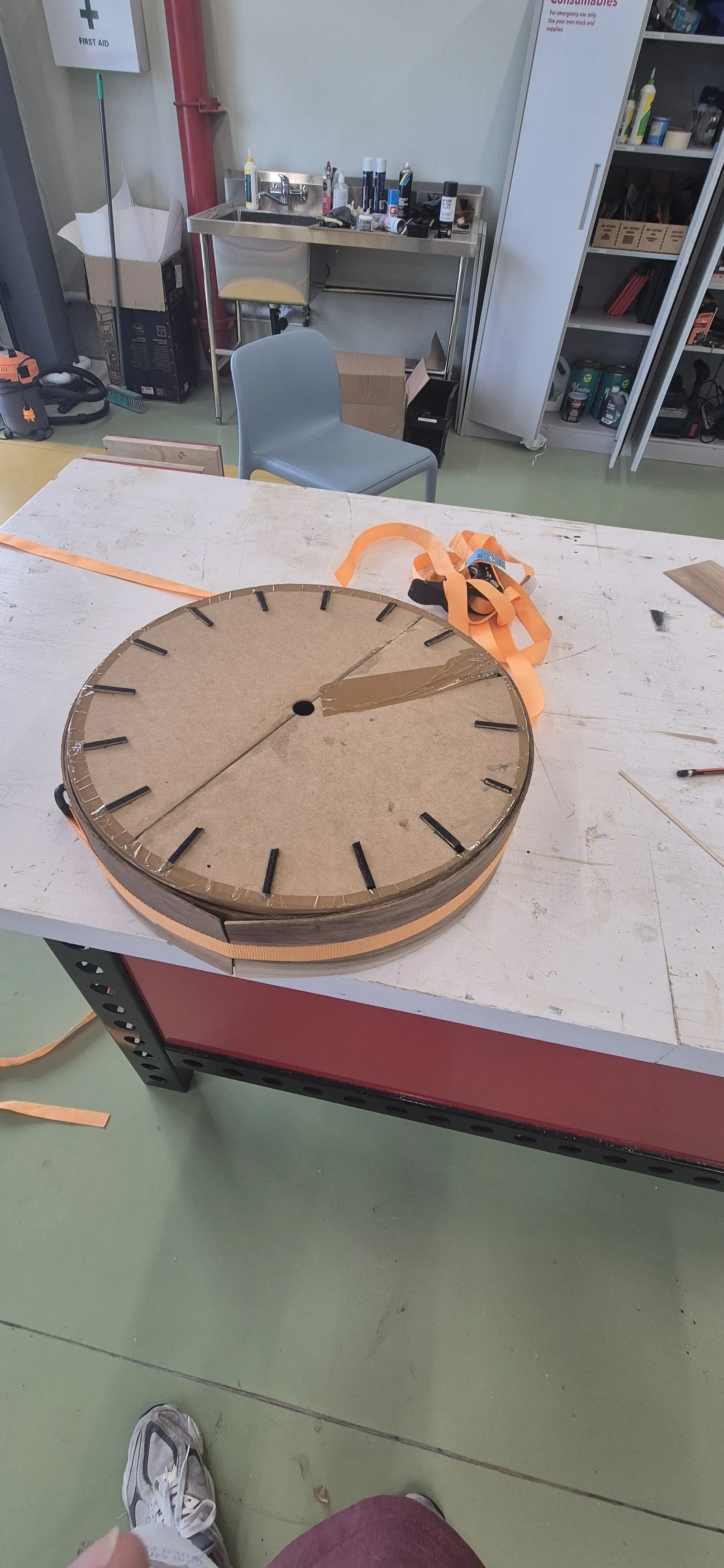
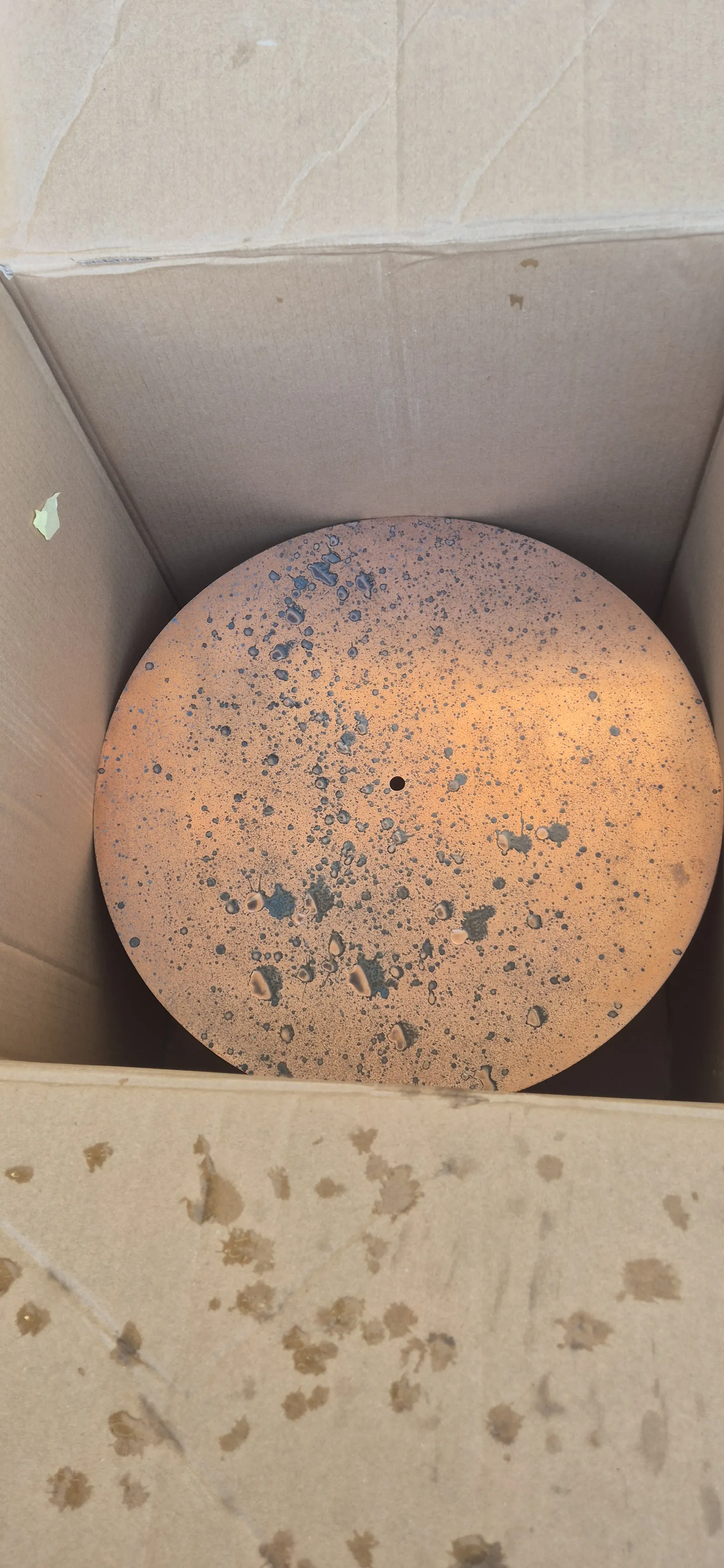
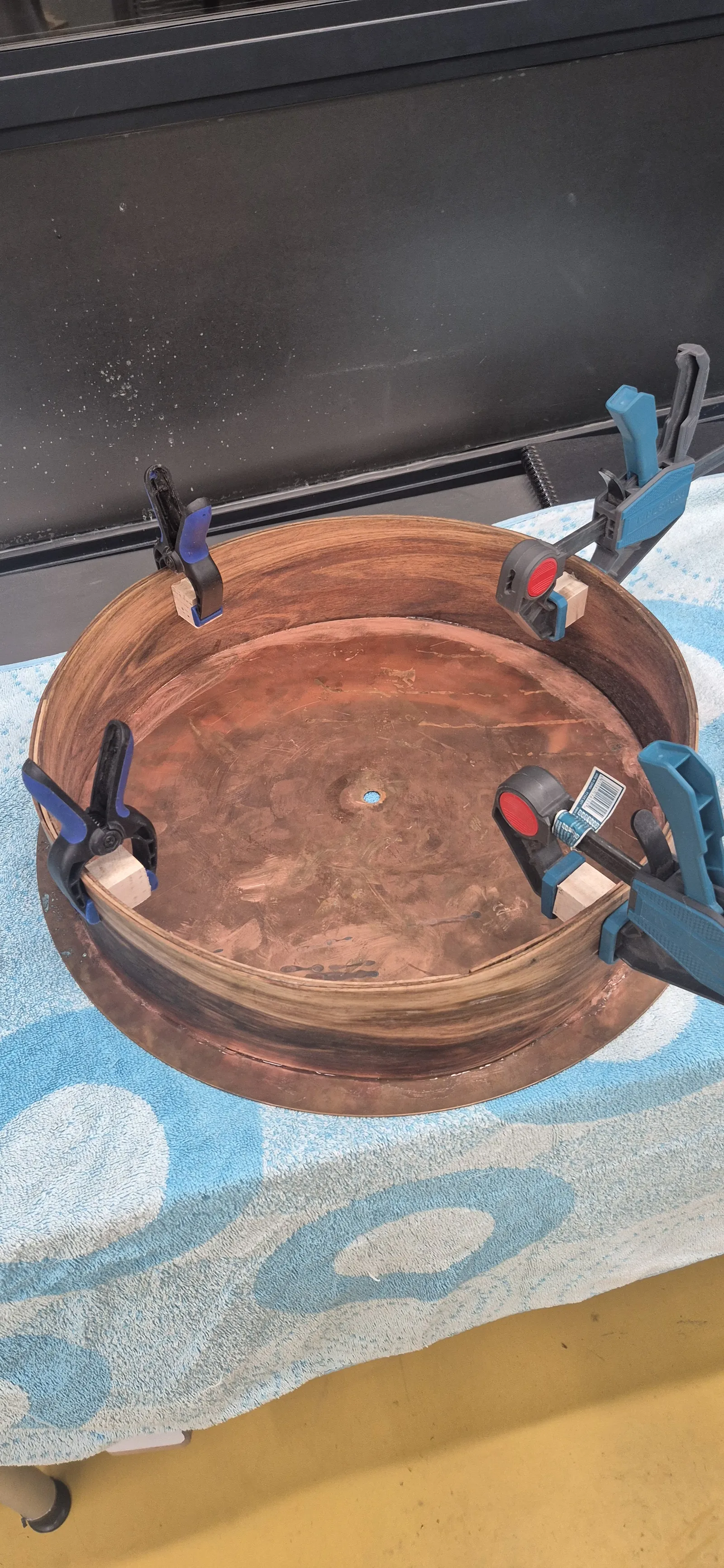
The drum is three 2 mm Blackwood plies bent round a laser-cut MDF former and glued into a closed ring, oiled, with no veneer. Blackwood is invasive in South Africa, so using it removes it. On 2 November the third ply cracked; I glued it, steamed the strip and bent it again, and it held. The copper was patinated by ammonia fuming, the ticks scribed through a laser-cut template, and the face epoxied to the drum. The back panel screws onto corner blocks, so the clock can still be opened and serviced.
Outcome
Assembled and running on 5 November 2026. The veil is annealed glass, because toughening would break a disc with the wedge cut out. The photos are of the real clock; the renders show the design model, whose patina differs from the fumed face.
 Photo
 Photo
 Photo
 Photo
 Photo
 Photo
 Photo
 Photo
 Photo
 Photo
 Photo
 Photo
 Photo
 Render
 Render
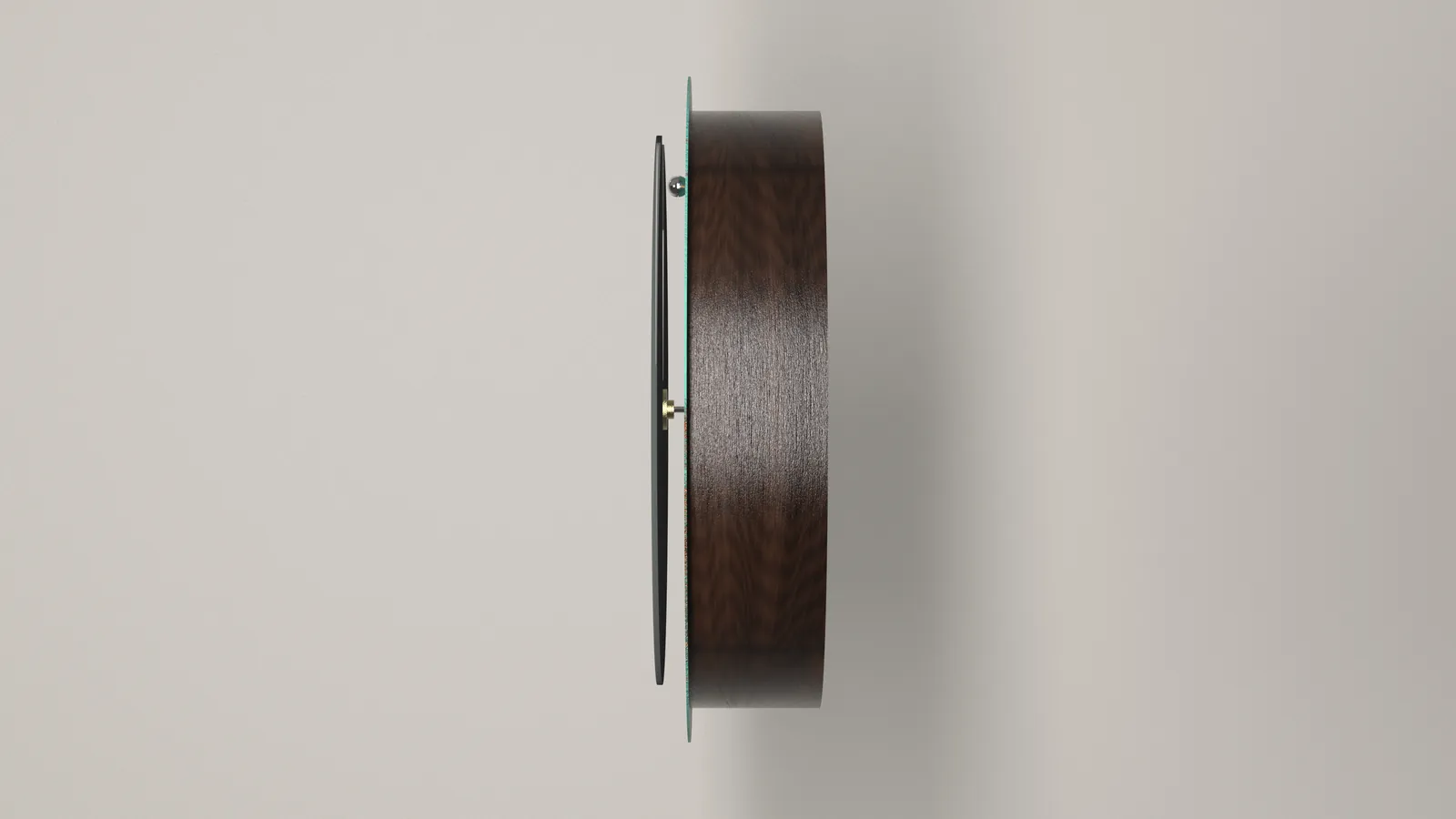 Render
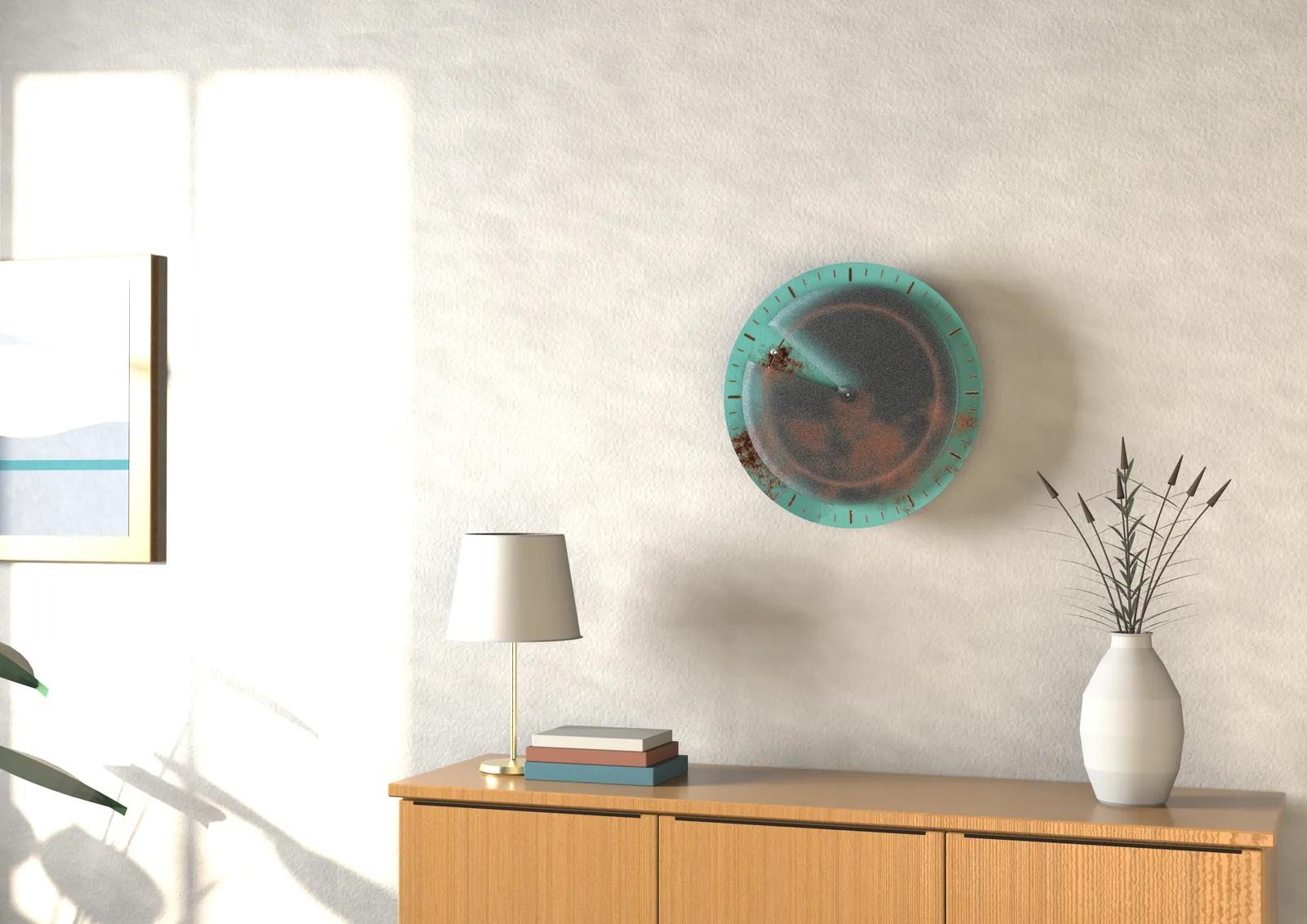 Render
 Poster
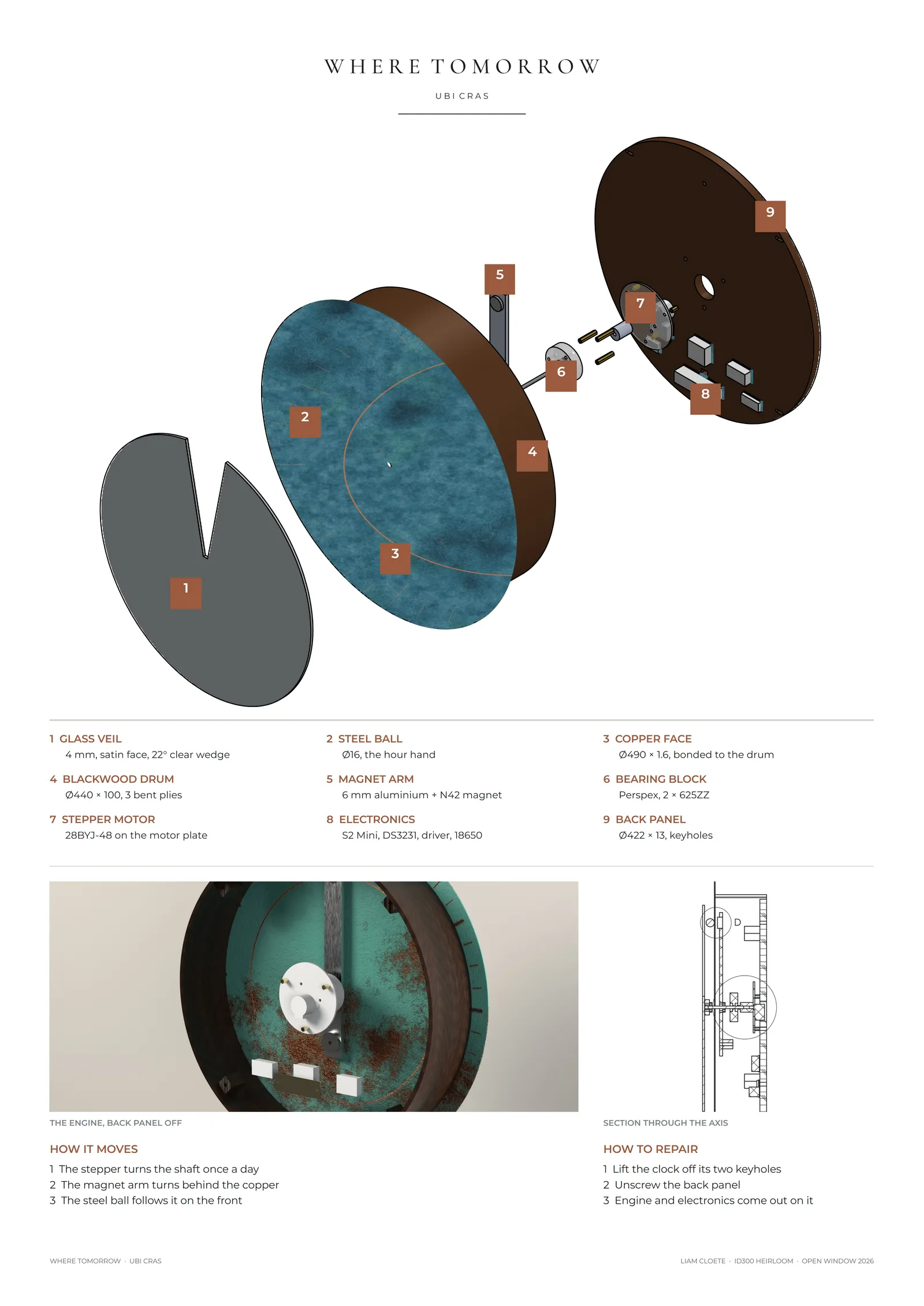 Poster
Take it apart
The SolidWorks assembly of the clock. Drag to turn it, slide to take it apart the way the exploded drawing does, and tap a part to name it: the arm and magnet behind the copper, the stepper motor, the bearings and the electronics on the back panel.
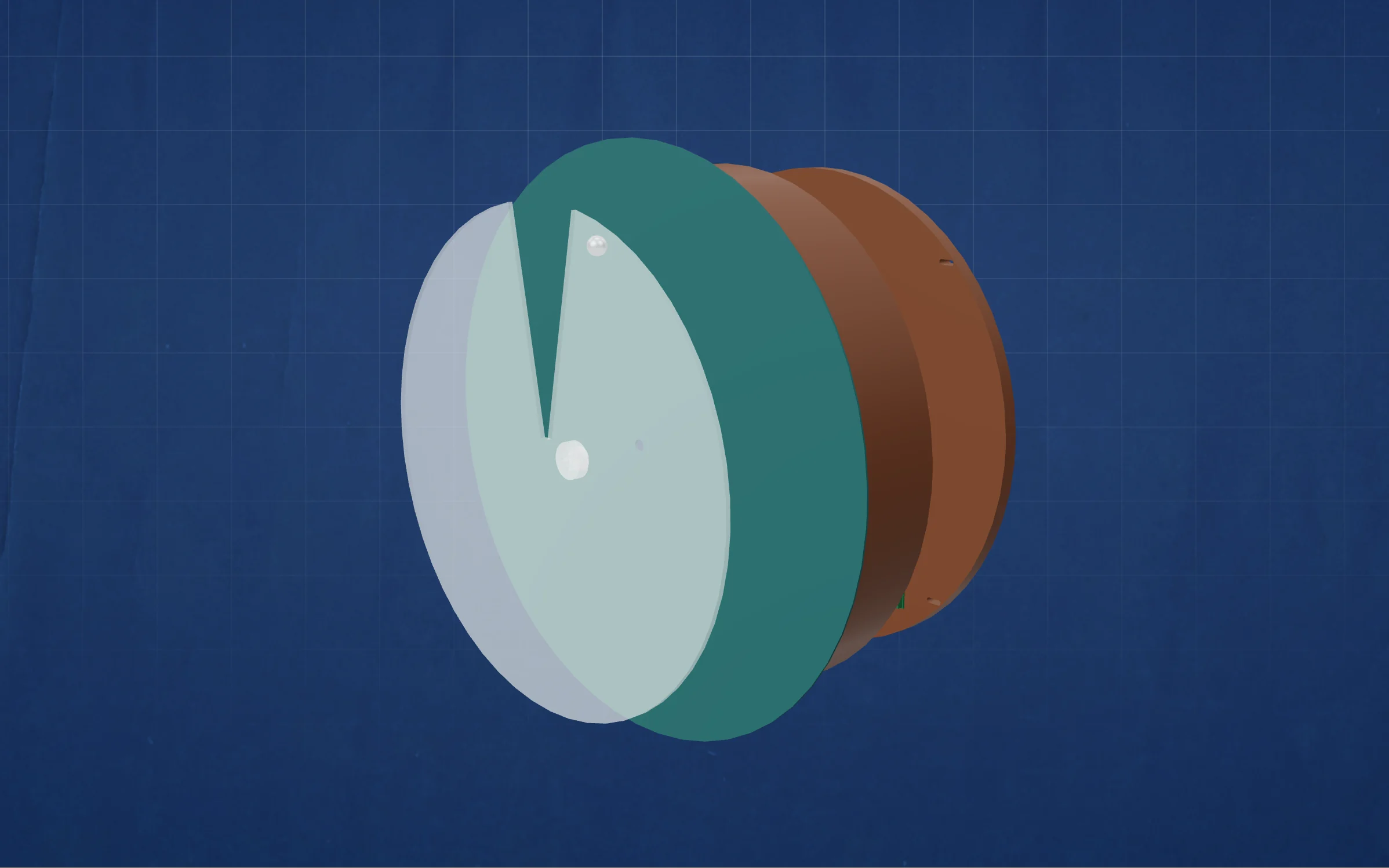 CAD model